Finding the major key from the key signature
How to find and remember the major key name from the sharps or flats in the key signature.
You have a score in front of you, and before the first note, a small group of sharps or flats catches your eye. This group at the beginning of the staff is called the key signature; it indicates that throughout the piece, whenever the corresponding note appears, it should be played with the alteration shown in the key signature. Repeating these alterations consistently gives the piece its key. Discover how to find the major key name that corresponds to a given number of sharps or flats in the key signature.
The key of C major
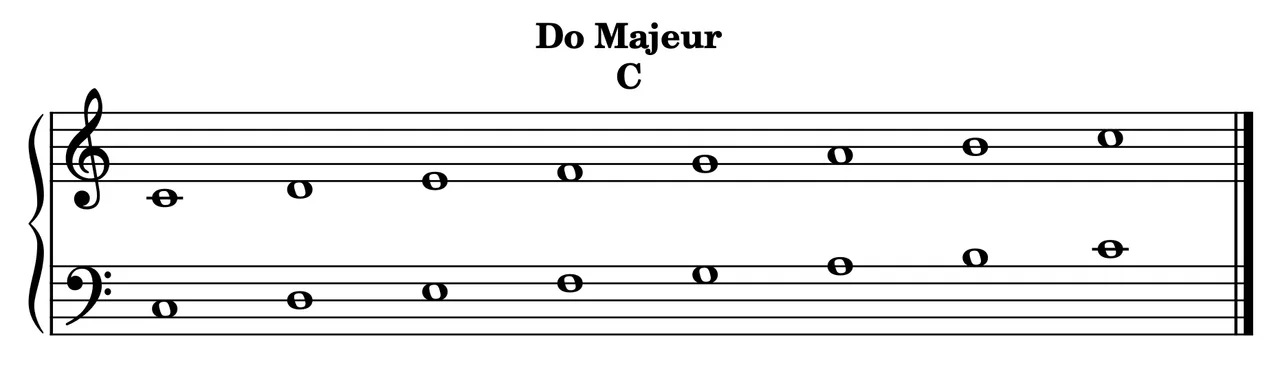
In C major, no note is altered. That is, there are no flats or sharps to play: all notes are played without alteration. The C major scale is very often the first scale learned and used when starting out in music. Here it is written in treble clef and bass clef below, along with a recording of this C major scale played on the piano.
2. Finding the major key with sharps
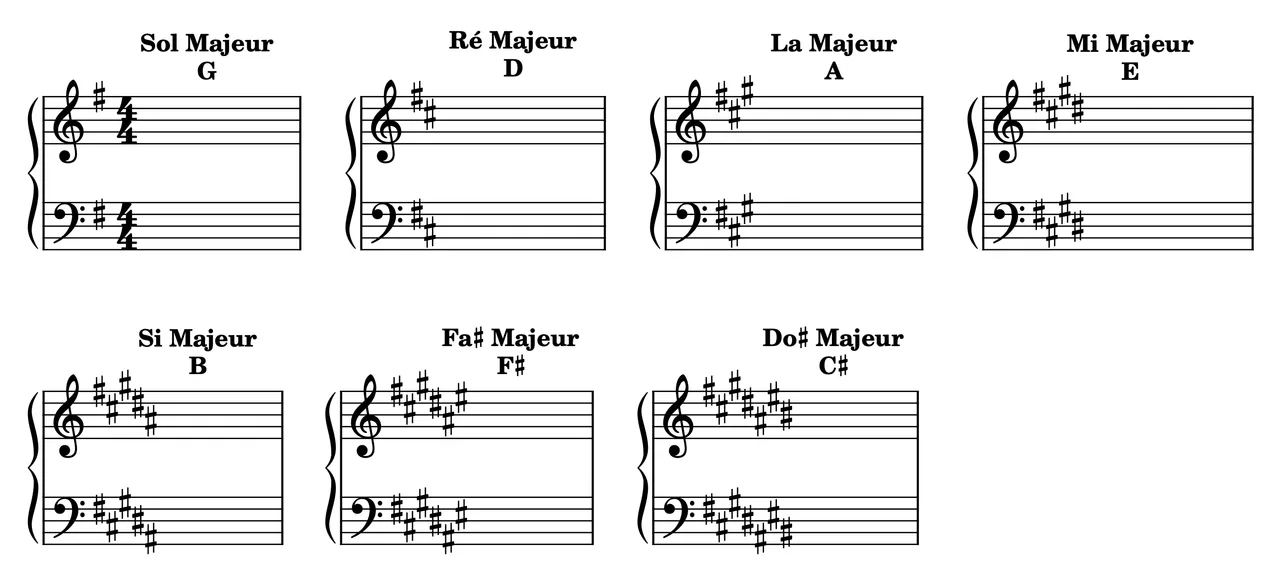
Sharps appear in a specific order: F♯, C♯, G♯, D♯, A♯, E♯, B♯. Each new sharp added changes the key.
To find the major key name from the number of sharps, take the last sharp in the key signature and go up a semitone. That note is the name of the major key. If you play the notes ascending from that note while respecting the sharps in the key signature, you get a major scale in the key of the signature.
Examples:
- The key signature has F♯; the last sharp is F♯; one semitone above F♯ is G; the key is therefore G major.
- The key signature has F♯, C♯, G♯ and D♯; the last sharp is D♯; one semitone above D♯ is E; the key is therefore E major.
This is a quick way to identify major keys with sharps.
3. Finding the major key with flats
Flats, like sharps, also appear in a specific order: B♭, E♭, A♭, D♭, G♭, C♭, F♭. Each new flat added changes the key.
This time, to find the major key name from the number of flats, take the second-to-last flat in the key signature. The note that corresponds to that alteration is the name of the major key. When there is only one flat, you cannot take the second-to-last flat. That is a special case and the key is F major.
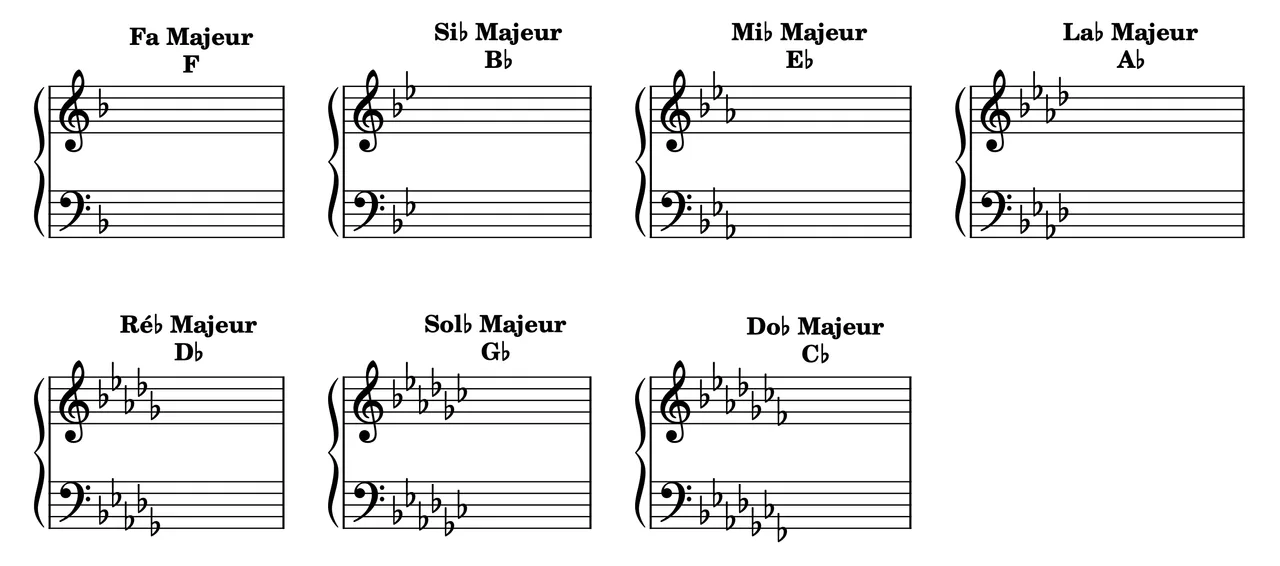
Examples:
- The key signature has B♭ and E♭; the second-to-last flat is B♭; the key is therefore B♭ major.
- The key signature has B♭, E♭, A♭ and D♭; the second-to-last flat is A♭; the key is therefore A♭ major.
- The key signature has B♭; the key is F (special case to remember)
4. Summary table of major keys
Does it seem complicated at first read? Don’t worry! With a little practice, by identifying keys from the key signature over and over, the exercise will become automatic. As with reading notes, consistency will make the difference. Soon, a quick glance will be enough to name the key. Here is a summary table below to help you memorize them.
| Number of sharps | Sharps in key signature | Major key |
|---|---|---|
| 1♯ | F♯ | G major |
| 2♯ | F♯ and C♯ | D major |
| 3♯ | F♯, C♯ and G♯ | A major |
| 4♯ | F♯, C♯, G♯ and D♯ | E major |
| 5♯ | F♯, C♯, G♯, D♯ and A♯ | B major |
| 6♯ | F♯, C♯, G♯, D♯, A♯ and E♯ | F♯ major |
| 7♯ | F♯, C♯, G♯, D♯, A♯, E♯ and B♯ | C♯ major |
| Number of flats | Flats in key signature | Major key |
|---|---|---|
| 1♭ | B♭ | F major |
| 2♭ | B♭ and E♭ | B♭ major |
| 3♭ | B♭, E♭ and A♭ | E♭ major |
| 4♭ | B♭, E♭, A♭ and D♭ | A♭ major |
| 5♭ | B♭, E♭, A♭, D♭ and G♭ | D♭ major |
| 6♭ | B♭, E♭, A♭, D♭, G♭ and C♭ | G♭ major |
| 7♭ | B♭, E♭, A♭, D♭, G♭, C♭ and F♭ | C♭ major |
Summary:
- With no alteration, the key is C major;
- With sharps, go up a semitone from the last sharp to find the major key;
- With flats, the second-to-last flat gives the major key.
Share